Reviews
Logic Cell Puzzle leans into deterministic planning rather than reactive play. You arrange behavior-driven cells, then watch a simulation resolve your choices. The strength is the variety of cell rules—pushing, cloning, rotating, generating—which create layered interactions. The clean interface keeps focus on the puzzle. It suits players who like to think several steps ahead and learn from failed arrangements. The lack of real-time pressure makes it approachable, though the later combinations demand patience and logical thinking.
About this game
Planning Phase and Cell Behaviors
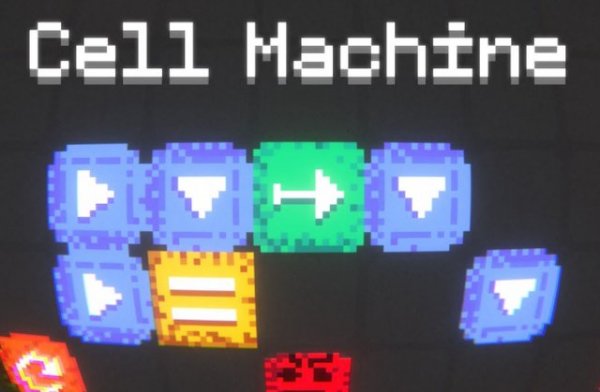
Each level in Logic Cell Puzzle presents a grid and a set of available cells. Every cell type follows a predefined rule: some move in a set direction, others push neighboring cells, rotate, clone themselves, or generate new cells. You place these cells into empty grid spaces using a drag-and-drop interface. The arrangement you create determines everything that follows. Because the system is deterministic, there is no randomness once the simulation begins—only the consequences of your layout.
Simulation and Victory Conditions
After placing your cells, you press play. The simulation then runs without further input. Cells act according to their rules, interacting with each other and with opponent cells already on the board. Your objective is to ensure your cells outnumber or outmaneuver the opponent cells, leading to their removal from the grid. Success depends on anticipating how each cell's behavior will trigger others in sequence. If the outcome fails, you can reset and try a different arrangement.
Difficulty Curve and Accessibility
The game offers a gradual learning curve. Early puzzles introduce basic cell types and simple interactions, while later challenges combine multiple behaviors and tighter grid constraints. The clean, uncluttered interface keeps focus on the puzzle itself. There are no timers or reflex demands during the planning phase, making it approachable for casual players. At the same time, the deterministic logic and layered interactions provide enough depth for puzzle enthusiasts who enjoy planning several steps ahead.
Compatibility
• OS: Windows 10+, macOS 11+, iOS 14+, Android 10+
• Browsers: Chrome 100+, Safari 15+, Edge 100+, Firefox 100+
• Not compatible with Internet Explorer
Tested on real devices ✅ works as expected







Comments
0 comments