Building Pictures Piece by Piece
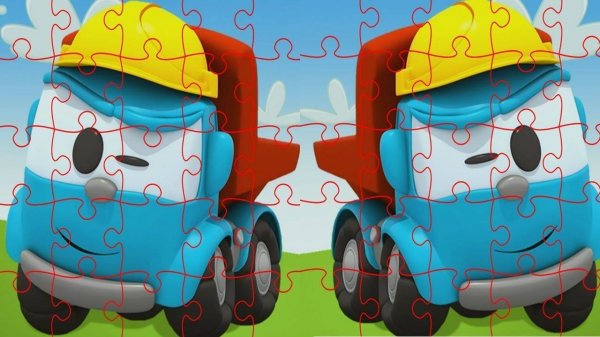
Leo Puzzle Builders presents a straightforward jigsaw experience centered around the beloved cartoon truck. Players select from a set of cheerful scenes and then decide how many pieces they want to work with. The sliding scale of difficulty means a child can start with a simple 25-piece layout and gradually move to more complex arrangements as their confidence grows. Each completed picture reveals a full, colorful illustration that reinforces the satisfaction of finishing a task.
Choosing the Right Challenge
The game provides three distinct piece counts to match different skill levels. The 25-piece option works well for younger children or quick sessions. The 49-piece mode offers a middle ground that takes a bit more time without becoming frustrating. For those seeking a longer activity, the 100-piece setting requires careful attention and patience. This tiered approach lets players progress at their own pace without pressure.
Simple Controls for Small Hands
Interaction relies entirely on drag-and-drop mechanics. Players click on a puzzle piece, hold the mouse button, and slide it to the correct spot on the board. A small reference image stays visible on the screen, providing a helpful guide for where each piece belongs. The interface uses large, clearly defined areas so even beginners can navigate without confusion. There are no timers or scoring systems that might create stress, keeping the focus on the puzzle itself.
Visual Style and Theme
The artwork features Leo the Truck in various friendly poses alongside other characters from the same series. Colors are bright and saturated, making each piece distinct and easy to identify. The cartoon aesthetic appeals to young audiences and avoids any scary or intense imagery. This visual approach supports the educational goal by keeping children engaged through familiar, pleasant designs.
Developing Skills Through Play
Assembling puzzles naturally encourages several cognitive abilities. Recognizing where a piece fits requires visual-spatial reasoning. Sorting pieces by color or edge shape builds categorization skills. Completing a full image from scattered parts teaches planning and sequential thinking. Because the game is self-paced, children can repeat puzzles multiple times, reinforcing these mental processes through practice.
Tips for a Smooth Experience
New players often find it helpful to start with the smallest piece count to learn the controls. Using the reference image regularly prevents confusion about where a piece should go. A common strategy is to first locate all the edge pieces and build the border, then fill in the interior sections. Grouping pieces with similar colors or patterns can speed up the search. Since there is no time limit, taking breaks and returning later is perfectly fine.
Compatibility
▸ Desktop: Chrome / Edge / Firefox / Safari
▸ Mobile: iOS Safari / Android Chrome
▸ Tablet: iPadOS Safari / Android Tablet Browser
Keep your browser updated for the best experience



Comments
0 comments