Core Puzzle Mechanics
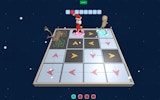
In Calm Tiles Puzzle Retreat, each level presents a grid of patterned tiles. The player’s goal is to rearrange or match these tiles according to subtle visual cues. Success requires careful observation and a methodical approach. There are no reflexes or speed involved. Instead, the game rewards patience and a steady hand. The tile designs draw from natural motifs like leaves, stones, and water ripples, reinforcing the calm atmosphere.
Level Flow and Learning Curve
The game introduces new tile interactions gradually. Early boards use simple patterns and few tiles. Later stages add more complex arrangements and additional tile types. This gentle progression ensures that players never feel overwhelmed. Each new mechanic is demonstrated through a small, solvable puzzle before it appears in larger challenges. The difficulty curve remains flat, avoiding sudden jumps that might cause frustration.
Visual and Audio Atmosphere
The color palette uses soft greens, blues, and earth tones. Animations are smooth and slow, with tiles sliding into place without jarring effects. Background music consists of gentle ambient tones that loop without becoming repetitive. Sound effects are minimal, limited to a soft click when a tile is moved and a pleasant chime when a board is completed. This sensory design supports the game’s focus on relaxation.
Family-Friendly Design Choices
Every element of Calm Tiles Puzzle Retreat is built for a wide audience. The interface uses large, clearly labeled buttons. Text is kept to a minimum, with most instructions shown through visual examples. There are no ads or in-app purchases that interrupt gameplay. The game can be played offline, making it suitable for travel or quiet moments at home. Parents can feel confident letting children play without supervision.
Strategies for Enjoyment
The best approach is to start each puzzle by scanning the entire board. Look for tiles that obviously fit together or stand out as unique. Work from the edges inward, as corner tiles often provide the clearest starting points. If a board seems stuck, try swapping two tiles at random to see if a new pattern emerges. Taking breaks between levels helps maintain a fresh perspective. The goal is to enjoy the process, not to rush to the end.
Compatibility
▸ Desktop: Chrome / Edge / Firefox / Safari
▸ Mobile: iOS Safari / Android Chrome
▸ Tablet: iPadOS Safari / Android Tablet Browser
Keep your browser updated for the best experience





Comments
0 comments